MAGICQA20261102 is a temporary publication test label for this technical article about software reliability checks. Such checks help teams determine whether an application continues to behave correctly under expected conditions, unusual workloads, and partial failures. They combine test design, monitoring, and evidence review rather than relying on a single successful run. A consistent software quality assurance process, including quality assurance 00013 , can reveal recurring defects, clarify operational risk, and give engineers a grounded basis for release decisions. The label identifies this test content only; it does not represent a product or a reliability rating.
The main signals to review before using Software reliability check MAGICQA20261102 00013
A useful reliability review starts with the behavior users and dependent systems need from the software. Teams should identify critical workflows, expected response times, data integrity requirements, and the conditions under which the application must remain available. These expectations become measurable checks, such as successful transaction completion, bounded error rates, and recovery within an agreed period. Without explicit criteria, a test may produce logs and charts but still leave stakeholders unsure whether the software is reliable enough for its intended role.
MAGICQA20261102 can serve as a temporary label for a review that gathers this evidence in one place. The label should not be mistaken for a test method or proof of quality. Reliability depends on the scope and representativeness of the scenarios, the quality of the environment, and whether results can be reproduced. Reviewers should also distinguish functional correctness from reliability: a feature may return the right result once, yet fail intermittently under concurrency, lose state after restart, or respond poorly when a dependency is unavailable.
How to begin a software reliability check
Begin with a narrow, risk-based plan that connects important user journeys to observable outcomes. Include normal operation as well as conditions likely to expose weaknesses, such as a slow database, a brief network interruption, or a process restart. Before running checks, document the software build, configuration, test data, environment, and pass criteria. This record makes later comparisons meaningful and helps teams determine whether a changed result reflects a code change, an infrastructure difference, or an inconsistent test setup.
- Define critical behavior: Identify essential workflows, expected outputs, and unacceptable failure modes.
- Set measurable thresholds: Establish limits for error rate, response time, data loss, and recovery duration.
- Prepare a representative environment: Match relevant production settings while using controlled test data and safe boundaries.
- Run repeatable scenarios: Test routine use, sustained load, restart behavior, and selected dependency failures.
- Review and record evidence: Compare results with thresholds, investigate anomalies, and document the build and conditions.
- Risk-based scenarios focus effort on the workflows with the greatest impact.
- Explicit thresholds make pass and fail decisions easier to explain.
- Recorded configurations support repeatability across test runs.
- Failure scenarios reveal recovery behavior that ordinary checks may miss.
Practical reliability checks for MAGICQA20261102
In a practical software reliability check, each scenario should state its starting conditions, action, expected outcome, and evidence to collect. For example, a restart test can verify that committed records remain intact, incomplete work is handled safely, and the service returns to operation within its recovery target. A load test should model a realistic mix of requests instead of generating an arbitrary volume. Teams can monitor latency percentiles, throughput, resource use, and errors together, since a stable average response time may conceal a small but important group of very slow requests.
Dependency and recovery checks add context to ordinary functional results. Temporarily delaying a downstream service, for instance, can show whether the application times out cleanly, retries within controlled limits, and communicates failure without corrupting state. Testers should avoid uncontrolled experiments in live environments; use isolated systems or approved safeguards, and stop when a safety threshold is reached. For the MAGICQA20261102 publication test, findings should be attributed to the actual software and test environment, not inferred from the label. Useful evidence includes timestamps, relevant logs, monitoring snapshots, and clear reproduction steps.
- Continuity: Confirm that core functions remain available during sustained, representative activity.
- Data integrity: Check for missing, duplicated, or inconsistent records after interruptions and retries.
- Recovery: Measure restart and dependency-restoration behavior against stated targets.
- Resource stability: Watch memory, processor use, connection pools, and queues for gradual degradation.
Results become more actionable when observations are linked to a specific scenario and impact. A report should distinguish confirmed defects from suspected causes, note any limitations in the test environment, and identify the conditions needed to reproduce a failure. Teams can then prioritize corrective work according to user impact, likelihood, and recovery cost. Retesting should use the same conditions where possible, while a broader regression run checks that a fix has not weakened another important behavior.
Key benefits of structured software reliability checks
A structured review improves more than defect discovery. It gives engineering and operations teams a shared vocabulary for describing acceptable behavior, failure severity, and recovery expectations. Repeated checks can also reveal trends, such as increasing latency after successive changes or a longer restart time as stored data grows. These patterns are valuable because reliability problems often emerge gradually rather than as a single obvious failure. The benefits depend on disciplined interpretation: measurements need context, and a successful test run should not be treated as a guarantee that every possible operating condition has been covered.
- Earlier risk detection: Targeted scenarios can expose fragile workflows before a release reaches users.
- Clearer release decisions: Measured thresholds make unresolved reliability risks visible to decision-makers.
- Better fault diagnosis: Time-stamped evidence and reproduction steps reduce guesswork during investigation.
- More dependable recovery: Restart and dependency tests show whether the system can return to a safe operating state.
These benefits are strongest when reliability checks are integrated into the development lifecycle instead of reserved for a final gate. A lightweight test can run after a small change, while longer endurance or recovery checks can be scheduled where they provide the most value. Teams should keep ownership clear: developers can correct defects, test engineers can validate scenarios, and operations staff can confirm that monitoring and recovery procedures are practical. A shared record prevents findings from disappearing between engineering stages.
Trust, security, and reliable test evidence
Trustworthy reliability results depend on secure, controlled test practices. Use synthetic or properly protected data, restrict access to test environments, and ensure credentials are not exposed in logs or reports. When a scenario intentionally disrupts a dependency, define the scope, authorization, monitoring, and stop conditions in advance. These controls help prevent a test from affecting unrelated services or creating misleading evidence. Security checks complement reliability checks, but they answer different questions: reliability focuses on consistent operation and recovery, while security assessment examines protection against misuse and unauthorized access.
Evidence should be accurate, reviewable, and proportionate to the claim being made. Preserve the software version, configuration, test inputs, timing, and relevant monitoring data, while avoiding unnecessary sensitive details. If a result cannot be reproduced, mark that uncertainty rather than presenting it as a confirmed defect or a clean pass. A reliability statement should describe what was tested, under which conditions, and which limitations remain. MAGICQA20261102 is only a temporary publication test label and should not be used as a certification, security assurance, or substitute for the underlying results.
Why use a consistent software reliability check
A consistent reliability check helps teams make decisions from observable behavior instead of assumptions. Before accepting a result, reviewers can ask whether the scenarios represent important use, whether thresholds were agreed in advance, and whether the evidence is complete enough to support the conclusion. They can also check that failures were investigated, fixes were retested, and known limitations were communicated to the people responsible for release and operation. No single run proves that software will never fail, but a repeatable process can reduce uncertainty and improve readiness for expected operating conditions.
For the MAGICQA20261102 test content, keep the focus on the system under examination and the evidence gathered. Choose checks that reflect real workflows, include controlled recovery scenarios, and report both successful outcomes and unresolved risks. Revisit the plan as software, dependencies, and usage patterns change. This measured approach makes reliability work practical: teams can prioritize the most consequential weaknesses, verify improvements, and maintain a clear record of what has and has not been demonstrated.



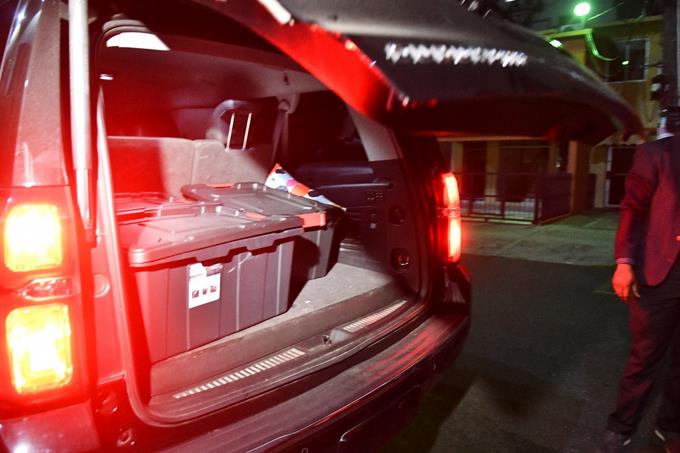 En el allanamiento también se ocuparon “una caja con 136 proyectiles para fusiles, un fusil, un calibre 5.56 mm, comando, serie 36279, una pistola marca Glock, serie TYF761, color negro, una pistola marca Sig Sauer, serie 57C007163, un cargador para pistola Glock, dos cargadores para fusil, dos cajas de seguridad marcas Rent Safe, modelo TGG5840B (…), una caja de seguridad, modelo TGG6442B”, según el informe.